What records need to be kept?
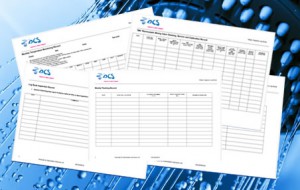
If you employ five or more people you must record the significant findings of your Risk Assessment. This requires documenting the significant findings of the assessment and details of any monitoring or checking being carried out.
If you have fewer than five employees you are not necessarily required to write anything down, although it is useful to keep a written record of your actions. You also need to keep records of your written scheme and the responsible person for managing that scheme. You should also keep the results of your routine monitoring. You need to keep these records for a minimum of five years.
 Does anybody else have to do anything about legionella?
Yes. Anyone who is involved in the supply of water systems and their components (e.g. designers, manufacturers, water treatment companies and suppliers) has to make sure that such equipment is designed and made in such a way that it is safe to use at work and it can be easily cleaned and maintained. They should tell you what risks might be present and how you can operate and maintain the system safely.
If you are using products or services, for example, for water treatment, the suppliers must make sure that these are effective at controlling Legionella and that they can be used safely at work. They should also tell you if, while they are treating your system, they find any problems which could pose a significant risk of Legionella exposure.
Do I have any other duties?
Yes. If you have a cooling tower or evaporative condenser on site you must, under the Notification of Cooling Towers and Evaporative Condensers Regulations, notify the local authority in writing details of where it is located. You must also tell them when/if such devices are no longer in use. Notification forms are available from your local Environmental Health Department.
If you have a case of legionellosis in an employee who has worked on cooling towers or hot water systems that are likely to be contaminated with Legionella; you have to report this under the Reporting of Injuries, Diseases and Dangerous Occurrences Regulations.
What happens when there is an outbreak?
Local authorities have special plans for dealing with major outbreaks of infectious disease, including legionellosis. These are usually investigated by an Outbreak Control Team whose purpose is to protect public health and prevent further infection.
The HSE or the local authority Environmental Health Department may also be involved in investigating compliance with health and safety legislation.